Newbies to MBTI like to type people by letters. It's simple, and it's what the actual MBTI association advocates. Then once they get the hang of it, they start hanging out in the online MBTI communities and get told that everything they're doing is wrong and they need to go by the functions cuz typing by letters is ignorant.

I've been interested in this stuff for like...half a year now. Not too long but I don't think MBTI is hard to get the hang of. It's just like applying categorizations to people you already know. And after going from letters to functions and seeing all the errors in logic people (read: N types) make by trying to turn personalities into this weird, abstract Ti Ni whatever shit*... I think there is a lot more validity to letter typing than people give it credit for. But I still think it's a good phase to go through, learning the functions, just so you know what interacts with what and how it manifests and all that shit.
*People are not that complicated. They just like to think they are. (Ironically it is the same Intuitives who call Sensors close-minded, that box themselves in with strict definitions of functions.)
Extroversion vs. Introversion

Gwen Stefani (ESFP) and Pharrell (ISFP)
I'm just gonna jump right into it. If you can't figure out where I was going with the intro then you aren't smart enough to read further.
Main difference
One talks and sometimes listens, the other listens and sometimes talks
More stuff
Extroverts maintain eye contact more while talking. They speak, then think, then speak, and often backtrack. They generally seem more engaged in the conversation. More gestures, more facial expression, more excitability, more vocal variation.
Introverts have softer voices. They're more modest in speech. They hold themselves back in conversation and in general. They seem more serious, and have more tendency toward anxiety. Often more awkward than their E counterparts.
Myths
Not exactly a myth, but a common one is extroverts can spend longer times with people, or gain energy around people versus losing it. This is mostly true, but there are a number of people who don't fit this, and social orientation exists on a scale. Exceptions include ExTx's who sometimes just don't like people very much and spend more time alone, and ExFPs (usually ENFPs) who are Fi subtype and "wear out" (for lack of better word) over the course of conversation. You rarely find an introverted ExFJ unless they're depressed.
Sensing vs. Intuition

Seth Rogen (INTP) and Snoop Dogg (ISTP)
Main difference
One is realistic, the other is theoretical
More stuff
Sensors talk about real stuff. What's going on now, what happened, who's doing what/who, news/pop culture, current stuff. They have a direct style of communicating and say things in clear terms. Sensors use common sense and don't trust anything they can't see for themselves.
Intuitives talk about what could or should or might be. Underlying patterns, implications, meanings. They have an indirect style of communicating, meaning they don't really get to the point, they just allude to it or imply it. Intuitives rely on ideas and the potential that things are true in theory. They are not as connected to reality as it currently exists. They'll always argue that last point because their hazy version of reality is all they'll ever know.
Myths
Sensors are less intelligent. Hopefully I don't have to explain this. Sensors don't make up 70% of the population because they're stupid. This idea mostly comes from angsty Intuitives who felt bullied or excluded by Sensors in high school and want something they can use against them. Yeah, no elaboration needed here. Anyone who believes this is worthless trying to convince otherwise.
Feeling vs. Thinking

Adam Levine (ESTP) and Katy Perry (ESFP)
Main difference
One prioritizes values, the other prioritizes logic
Other stuff
Feelers go by what feels consistent with their values/morals. Values are ultimately rooted in either social harmony/equality (Fe) or being true to oneself (Fi). They are more open about their personal lives. Overall they seem warmer. Not comfortable with conflict. Feelers strive for happiness.
Thinkers are rational above all. Feelers think they are. They're not. They'll do what makes themselves/others happy before they do the most logical thing. Thinkers come off as somewhat cold or unfeeling (surprise). Their feelings don't get hurt as easily. More willing to debate/argue/piss people off (intentionally or not). Thinkers strive for success.
Myths
Thinkers are smarter. Obvious stereotype is obvious.
Perceiving vs. Judging
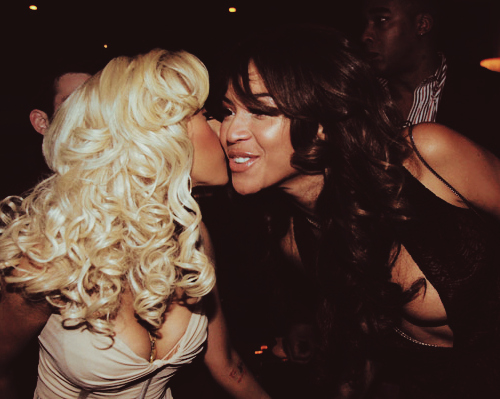
Christina Aguilera (ISFP) and Beyonce (ISFJ)
Most MBTI people would probably have no problem with what I've said up to this point. When it comes to P vs J though, everyone seems to get their panties in a twist. "There's no difference between P and J! You have to go by the functions! J and P just tell you what functions they use!" They exclaim. Wrong again. There are some distinct differences between P and J types.
Main difference
One is Type A, the other is Type B
More stuff
What do I mean by Type A and Type B? Type A is the planner. The get-shit-done-r. This, of course, is the Judger. Not proceeding without direction or a goal. A situation where everything is stable and in working order is where they thrive. They know how to manage and assign duties. Things get done in a step-by-step fashion. They speak in an assured, intentional manner and are less prone to tripping over their words. Judgers are good at preparing. Tendency toward dichotomies: things are right or wrong, black or white, acceptable or unacceptable.
Type B does not get much credit in pop culture. They're seen as laid-back and go-with-the-flow. Which is true but there's more. Perceivers thrives on instability. They're the quick thinkers (N) or reactors (S). They slowly die in repetitive, predictable environments. They're the type who can't won't hold down a job for very long. They tend to like being independent contractors and choosing their own hours. They do their best work through improvising. They speak quickly and choppily, and are more likely to use lots of filler words or ramble. Perceivers are good at handling the unexpected. See things on a spectrum; nothing is good or bad, everything is relative.
Myths
Judgers are organized and Perceivers are messy. Anyone can be messy or neat for any reason. I, for example, like my space to look appealing and having a mess puts me in a bad mood. My J dad is a packrat who seriously needs help, but he is very stubborn methodical, or mentally organized.
I'll add more to these later if I think of more stuff. This is all I got for now. But yeah, typing by letters is not as unreliable as it's made out to be. It gives you a good basis for what someone might be, and you can always reassess their type later once you get a better idea of how types look in reality. Don't live and die by MBTI.
As always, I don't know how to write interesting conclusions, so here's a picture of Justin Bieber's latest poor choices in hairstyling. Someone really needs to put a stop to this:

This is what happens when you have too many enablers


No comments:
Post a Comment